Forest bathing · Japan
Kyoto
Japan invented forest bathing and measured it. Around Kyoto the cedar trails, temple gardens and mountain onsen make a week that lowers blood pressure and raises attention.

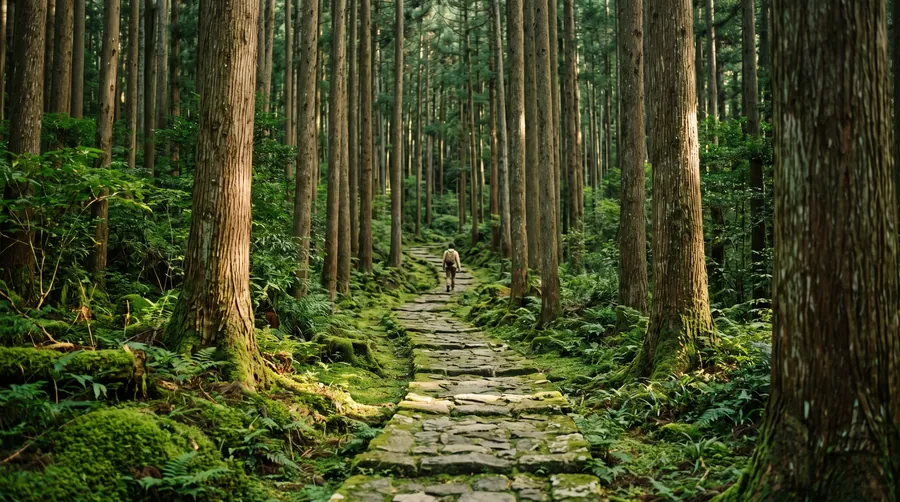
Shinrin-yoku, taking in the forest atmosphere, became a public health practice in Japan in the 1980s. Studies since then have found lower cortisol, lower blood pressure and better immune markers after a few slow hours among trees. Kyoto is the ideal place to try it: the city is ringed by forested hills, and within an hour you can walk from Kurama to Kibune through cedars, sit in a moss garden at Saiho-ji or Gio-ji, and end in a hot spring.
The food does its part. Shojin ryori, the temple cuisine, is vegetables, tofu, seaweed, pickles and rice prepared with more care than most restaurants give a steak. Breakfast in a ryokan is grilled fish, miso, rice and pickles: protein, fermented food and no sugar. Green tea is everywhere and matcha is a ritual, not a latte.
Come in spring or autumn, stay in a ryokan with a bath, walk every day and keep at least one afternoon empty. Kyoto punishes an itinerary and rewards attention.
The longevity profile
- Best months
- Mar · Apr · May · Oct · Nov
- Ideal stay
- 7 to 10 days
- Budget
- €€€€
- Night from
- €160
Signature ritual: Two hours in a forest without a destination, phone in the bag, looking at what is close.
A day in Kyoto
From first light to last light.
- 06:00Fushimi Inari
The thousand gates before the crowds, up to the summit and down through the forest side.
- 08:00Ryokan breakfast
Grilled fish, miso soup, rice, pickles, tamagoyaki, green tea. Slow, kneeling, quiet.
- 10:00Kurama to Kibune
The cedar trail over the mountain, ninety minutes if you hurry, three hours if you do it properly.
- 13:00Shojin ryori
Temple lunch: sesame tofu, simmered vegetables, pickles, rice, a sweet made of beans.
- 15:00Moss
An hour in a moss garden. Sit. That is the whole instruction.
- 17:00Onsen
The hot spring at Kurama, outdoors, with the forest above the steam.
- 19:00Kaiseki
A seasonal dinner of many small courses. Bed on tatami by ten.
Good to know
Tips for Kyoto.
- Stay in a ryokan for at least two nights; the breakfast alone is a lesson in eating.
- Avoid Golden Week (late April to early May) and the autumn colour peak weekends; go midweek and early.
- Rent a bicycle: Kyoto is flat and the canal paths are the best way to reach the hills.
- Saiho-ji, the moss temple, requires a reservation; Gio-ji and Sanzen-in are easier and just as calm.
- Nara is an hour away; its deer park and Kasuga forest make a perfect day of walking.
Frequently asked questions
What is shinrin-yoku?
Forest bathing: spending unhurried time in a forest, using all senses, without exercise goals. Japanese research links it to lower stress hormones, lower blood pressure and better mood.
Do I need a guide for forest bathing?
No. Guided walks exist and help beginners slow down, but the practice is simple: walk slowly, stop often, look, listen, breathe.
Is Kyoto expensive?
Mid-range. Ryokan stays with two meals cost more than hotels, but temple lunches, trains and walks are cheap.

Nearby