
Shinrin-yoku is not a hike. It is two slow hours among trees with all senses open, and Japanese researchers have measured what it does to blood pressure, cortisol and immune cells.
In 1982 the Japanese forestry agency coined shinrin-yoku, forest bathing, as a public health idea: encourage people to spend time in the country’s forests, which cover two thirds of the land. It was a marketing term with a hunch behind it. The hunch turned out to be right. Over the following decades, researchers at Chiba and Nippon Medical School measured people before and after slow forest walks and found lower cortisol, lower blood pressure and heart rate, better mood scores and, after several days, increased activity of natural killer cells, part of the immune system’s defence against viruses and tumours.
Why trees
Part of the effect is simply being outdoors, unhurried, away from screens and noise. Part seems specific to forests. Trees release phytoncides, volatile compounds like alpha-pinene and limonene that defend them against insects and fungi, and inhaling them appears to be what raises the immune markers. The green, fractal patterns of foliage are easy on the visual system. And a forest is quiet in a particular way: sound without information.
How to do it
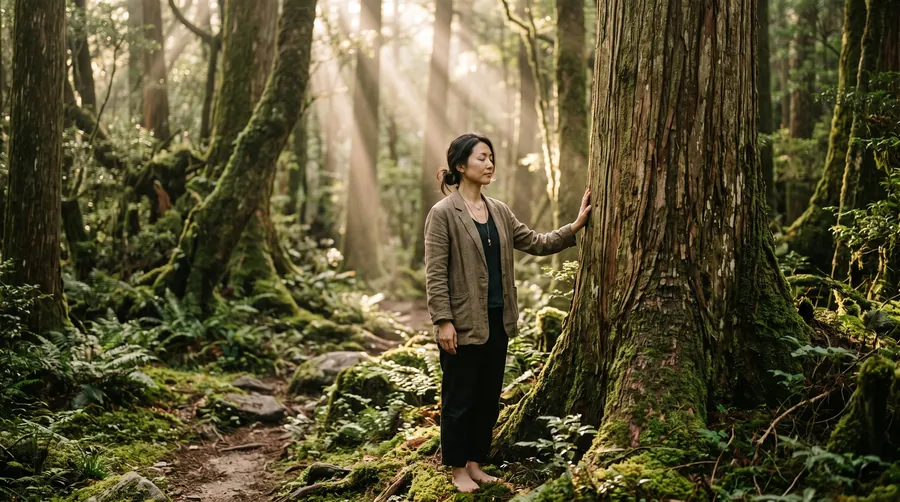
The instructions are almost embarrassingly simple. Walk slowly, much more slowly than usual, for at least an hour and ideally two. Leave the phone in the bag. Stop often. Look at what is close: bark, moss, light on leaves. Listen for the furthest sound and the nearest. Touch things. Breathe through the nose. Sit for a while somewhere you like. It is not exercise and not meditation, though it borrows from both. Guided walks exist and help beginners slow down; after one or two you will not need them.
Where
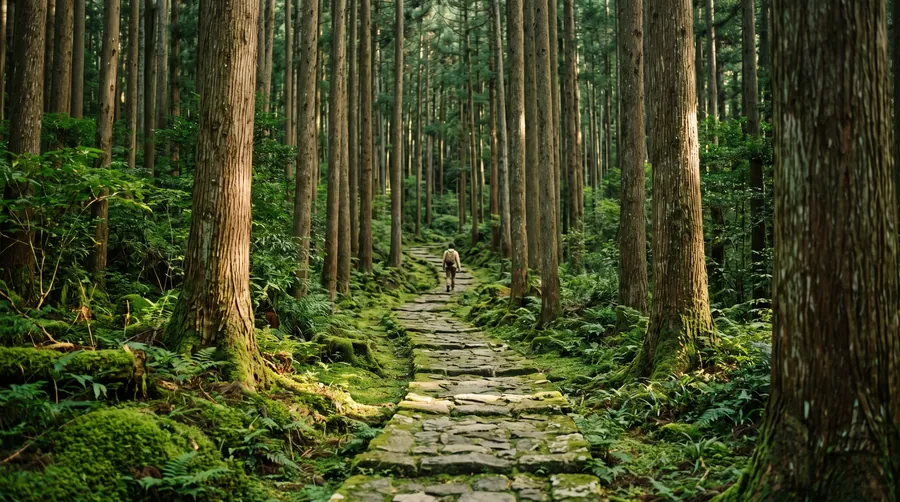
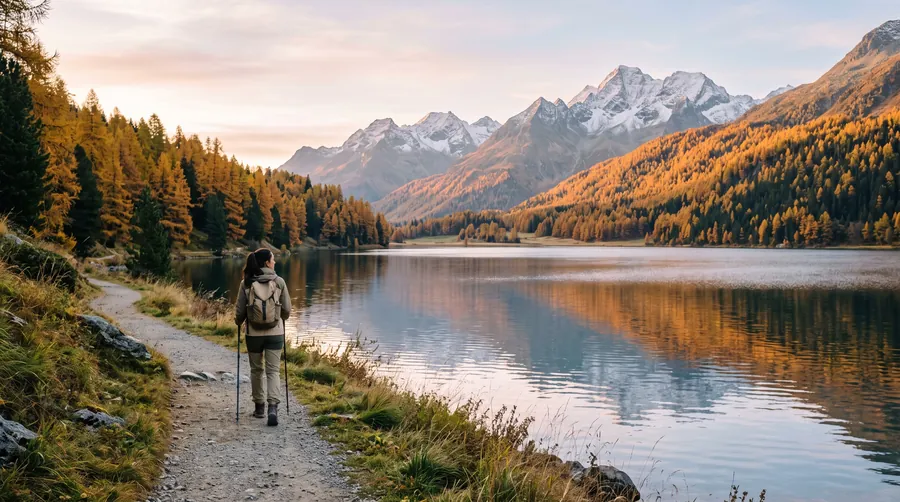
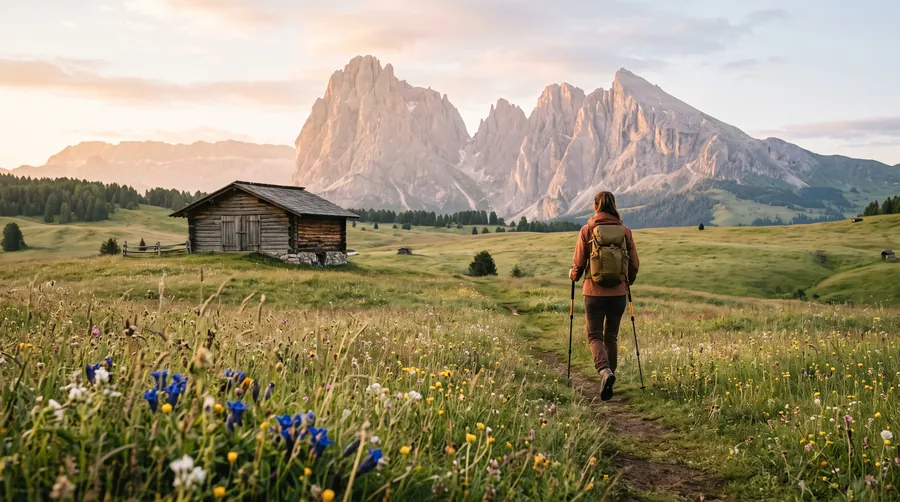
The cedar trails from Kurama to Kibune above Kyoto are the classic setting, with a hot spring at the end. The larch forests of the Engadin and the pine woods of South Tyrol do the same in Europe; the jungle ridges of Ubud add birdsong. A city park works too, at a fraction of the effect. The Breathe tool is the indoor version for the days between.
Try it
BreatheA guided breathing circle: four seconds in, seven held, eight out, or the box and coherent patterns.Longevity DaySet your wake time, sleep target, eating window, movement and wind-down, and the tool lays out a day built on the six pillars: light first, food in a window, movement before lunch, dark before bed.Frequently asked questions
Does forest bathing need a certified guide?
No. Guides help with pacing and attention exercises, but the practice is simple enough to learn alone in one afternoon.
Does a park work as well as a forest?
Parks reduce stress measurably; forests do more, probably because of the phytoncides and the deeper quiet. Use parks daily and forests when you can.