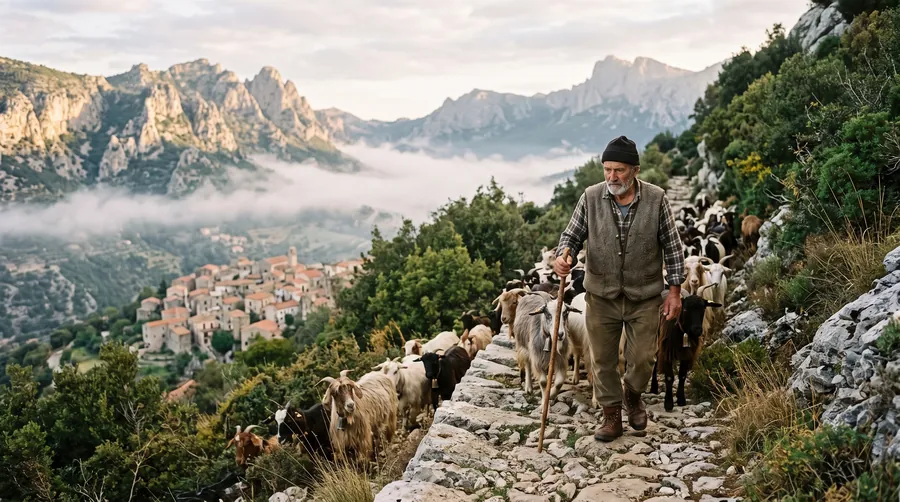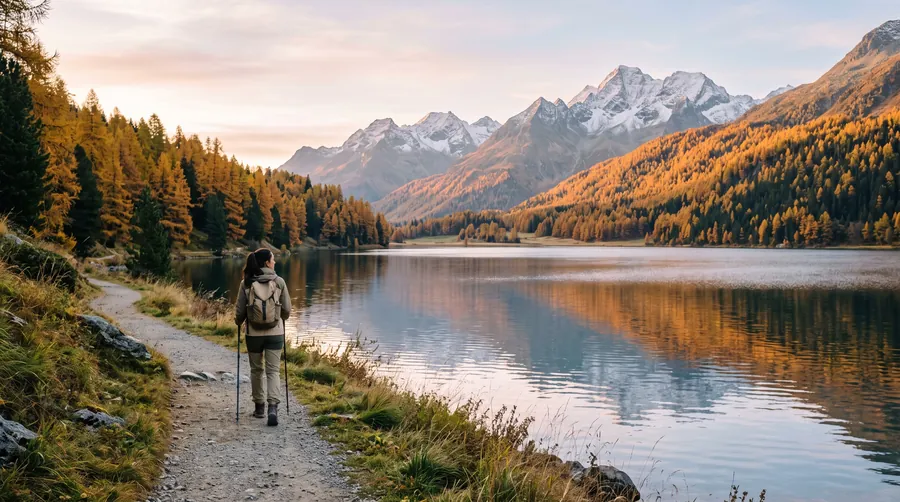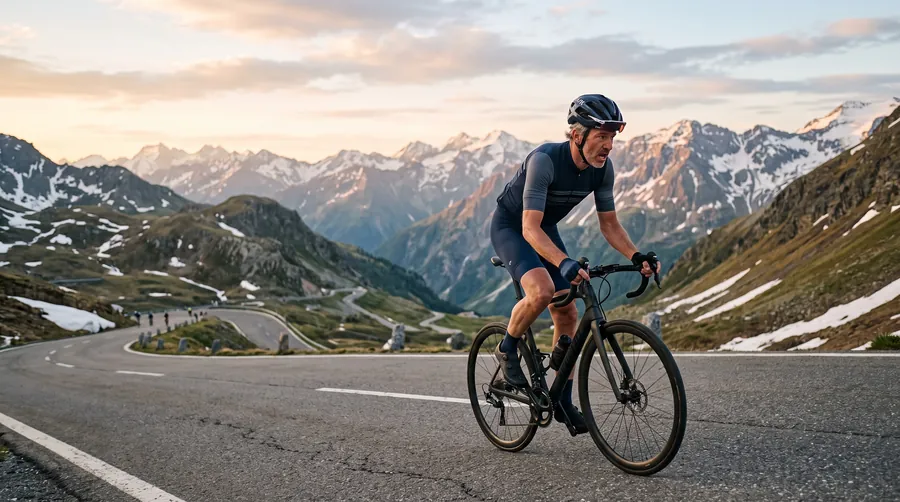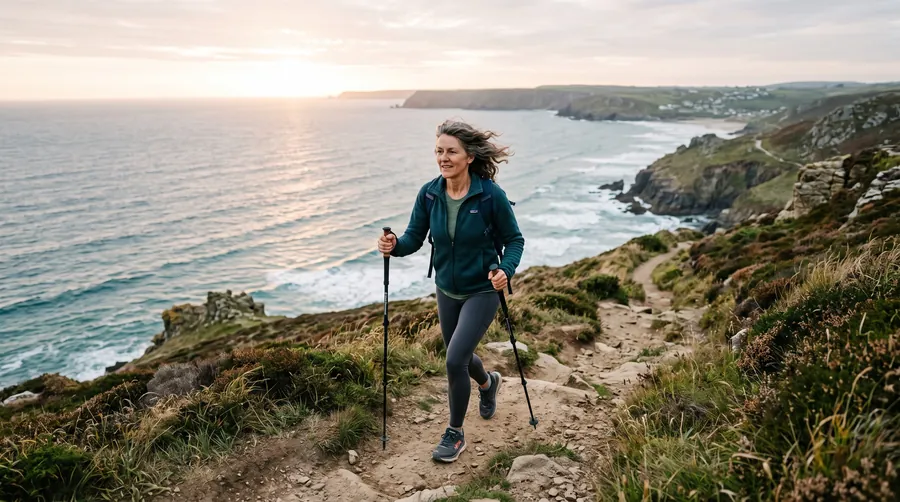

The pace at which you can talk but not sing builds the engine that keeps you alive. Blue Zone shepherds do it all day; the rest of us need three hours a week.
Every longevity clinic now talks about zone 2, and for once the fashion is right. Zone 2 is the intensity at which your body burns mostly fat, your mitochondria are working hard but not desperately, and you can still speak in full sentences. For most people it is a brisk walk on a hill, an easy bike ride or a slow run. It is the pace of a Sardinian shepherd and it is the foundation of cardiorespiratory fitness, which predicts lifespan better than almost any number a doctor can measure.
Why the slow pace matters
At zone 2, the muscle cells rely on their mitochondria to turn fat and oxygen into energy. Training there increases the number and efficiency of those mitochondria, improves the body’s ability to clear lactate and raises the metabolic flexibility that declines with age and inactivity. Studies of endurance athletes show that they spend around eighty percent of their training at this easy intensity and only a small fraction going hard. The easy hours are where the base is built; the hard sessions sharpen it.
Finding the pace
You do not need a monitor. The talk test is reliable: if you can hold a conversation in complete sentences but would not want to sing, you are there. If you can sing, speed up. If you are gasping between words, slow down. With a monitor, zone 2 is roughly sixty to seventy percent of maximum heart rate, though the number varies. For a fit fifty-year-old it might be a heart rate of 115 to 130; for a beginner the same effort might be a flat walk at a good pace.
How much
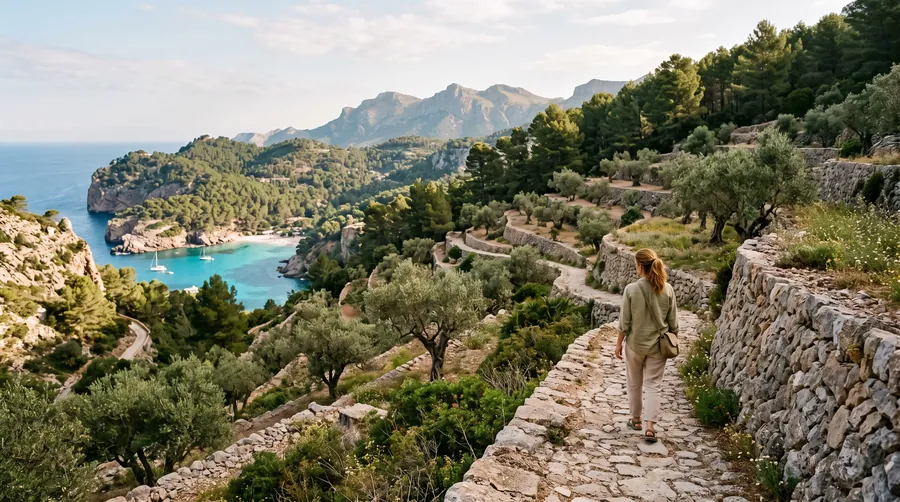
Three to four sessions of 45 to 60 minutes a week is the dose most experts suggest, which sounds like a lot until you realise it is a daily walk with intent. It is easier on holiday than at home: a walking week in the Engadin or on the GR221 in Mallorca delivers three hours of zone 2 before lunch every day. Add one session a week that gets you properly out of breath, and two short strength sessions, and the programme is complete.
Where to walk it
Hills are the best zone 2 machine ever built. The Sardinian villages, the terraces of South Tyrol, the cliff paths of the Algarve: all of them push the pace into the zone without a plan. The Walk the World tool turns your daily steps into distance; the hiking journey describes the week.
Try it
Walk the WorldEnter your daily steps and height, and the tool converts a year of walking into kilometres and into a journey between the fifteen destinations on this site.Vitality ScoreSleep, steps, strength, plants, alcohol, friends, purpose, stress, daylight and breath.Frequently asked questions
Is walking really zone 2?
For most people a brisk walk, especially uphill, reaches the intensity. Very fit people need to jog or cycle to get there.
Can I do zone 2 every day?
Yes. It is low-stress training that most bodies recover from overnight, which is why endurance athletes accumulate so much of it.