
The body clock shifts about an hour a day. Light, meals and caffeine can steer it. Here is the plan we use for flights east and west.
Jet lag is not tiredness; it is a body clock that thinks it is somewhere else. Every organ runs on a roughly 24-hour cycle set by the master clock in the brain, and that clock adjusts by about an hour a day, faster when you help it and slower when you fight it. A flight across six time zones therefore costs most people four to six days of poor sleep, bad digestion and foggy afternoons. The protocol below usually halves that.
East versus west
Flying west lengthens the day, which the clock finds easy because its natural period is slightly longer than 24 hours. Flying east shortens it, which is hard. Rule of thumb: westward, you need about one day per one and a half time zones; eastward, one day per time zone. Adjusting before the flight helps most for eastward trips.
Before the flight
Three days before an eastward flight, go to bed and wake an hour earlier each day; get bright light as soon as you wake and avoid it in the evening. For westward flights do the opposite: stay up an hour later, seek evening light, sleep in. Move meals with the schedule. Cut alcohol.
On the plane
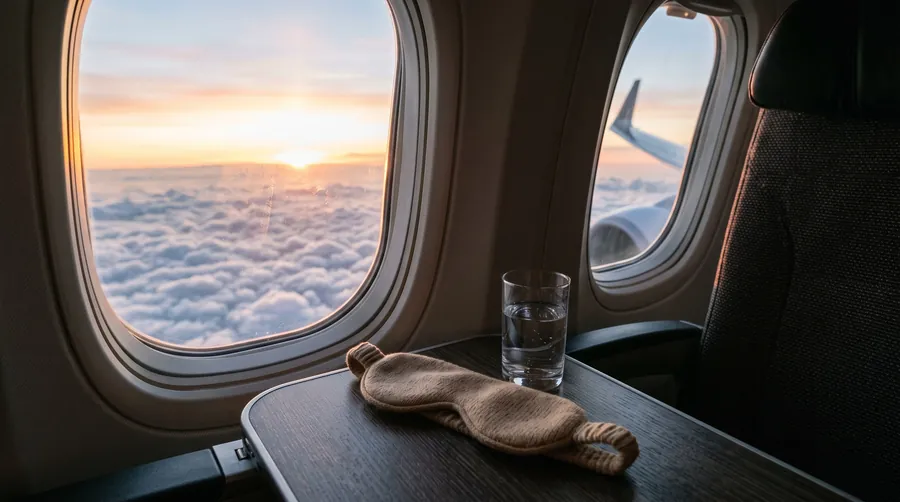
Set your watch to the destination on boarding. If it is night there, sleep or at least rest in the dark with a mask; if it is day, stay awake, read, walk the aisle. Drink water, skip alcohol, keep caffeine for what will be morning at the destination. Eat lightly, at destination meal times if you can.
On arrival
Light is the lever. After an eastward flight, get outside in the late morning and afternoon of local time and avoid bright light in the early morning for the first two days; after a westward flight, seek evening light and avoid it early. Stay awake until at least nine in the evening local time; a short nap of twenty minutes is allowed, longer is not. Eat breakfast at local breakfast time even without hunger; meals set the peripheral clocks. Exercise outdoors on the first morning.
The tool
The Jet Lag Planner builds this schedule for your route: enter departure and arrival cities and it gives you a three-day light, sleep and meal plan you can share with whoever is travelling with you.
Try it
Jet Lag PlannerEnter where you fly from and to, and the planner builds a three-day light, sleep and meal schedule before the flight and after landing, based on how the body clock actually shifts.Longevity DaySet your wake time, sleep target, eating window, movement and wind-down, and the tool lays out a day built on the six pillars: light first, food in a window, movement before lunch, dark before bed.Frequently asked questions
Does melatonin help with jet lag?
A small dose at the destination bedtime can help for eastward flights of five or more time zones, according to reviews. It is a regulated medicine in some countries; ask a pharmacist.
Is it better to stay awake or sleep on the plane?
Follow the destination clock: sleep if it is night there, stay awake if it is day. Arriving in the morning after a night of rest is the best case.