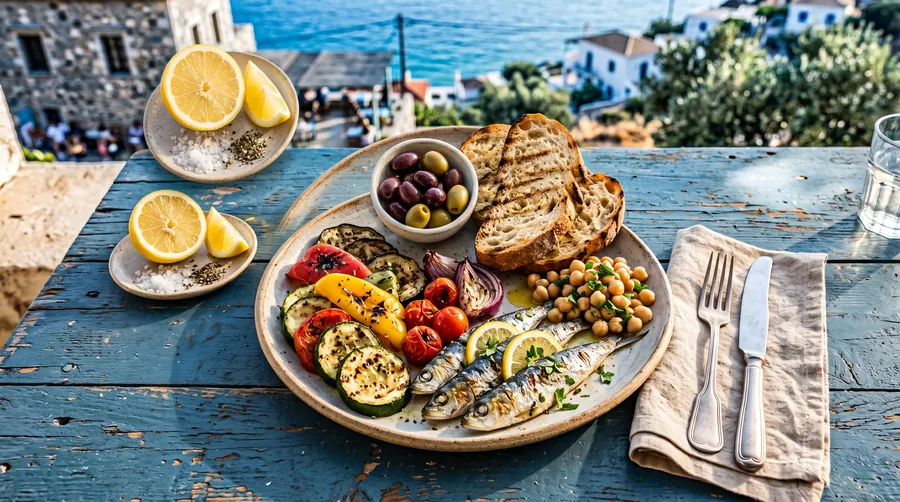

Okinawans say a Confucian phrase before meals and stop eating when they are eighty percent full. It may be the single most effective longevity habit ever measured.
Hara hachi bu means, roughly, belly eight parts full. Older Okinawans say it before a meal the way others say grace, and they mean it: they stop when they could still eat a little more. It sounds like a diet tip. It is closer to a philosophy of enough, and it explains a good part of why the island’s elders ate around 1,900 calories a day for most of the twentieth century while doing physical work.
Why it works
The stomach tells the brain it is full with a delay of about twenty minutes. Eating until you feel full therefore means eating past it, every time. Stopping at eighty percent lands you at roughly the right amount once the signal arrives. Over years, the difference is hundreds of calories a day, which is the difference between a stable weight and a slowly rising one. Calorie restriction without malnutrition is also the intervention with the most consistent evidence for extending lifespan in animals, and the human data on modest restriction point in the same direction: lower blood pressure, better insulin sensitivity, less inflammation.
How Okinawans make it easy
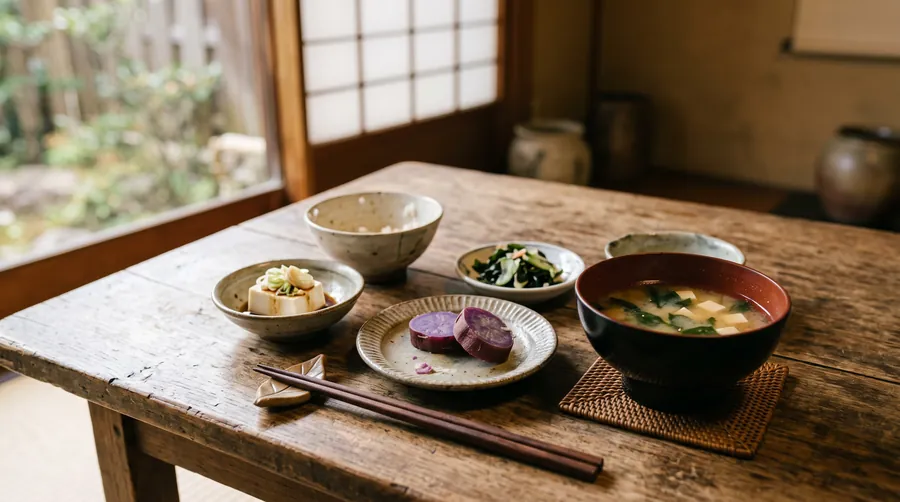
The rule is supported by the plate. Traditional Okinawan food is high in volume and low in calories: sweet potato, bitter melon, tofu, seaweed, vegetables in broth. You can eat a large bowl and still be at 1,900. Meals are served in small dishes rather than one pile, which slows eating. And the phrase itself, said aloud, turns a vague intention into a rule. Rituals beat willpower.
Practising it at home
Serve on smaller plates and put the pan away before you sit down. Eat slowly enough to notice the point where hunger is gone but you could continue; that is the stop. Wait ten minutes before any second helping. Make lunch the big meal and dinner the small one, as Sardinians and Ikarians also do. And say the words, or your own version of them, before eating. It sounds foolish for a week and then it becomes a habit.
On the road
Buffets are the enemy and the market is the friend. Order two starters instead of a main. Share desserts. In Japan the small dishes do the work for you; in the Mediterranean the long lunch slows you down enough to feel the signal. The Longevity Day tool builds an eating window around the rule; the Okinawa guide shows where it comes from.
Try it
Longevity DaySet your wake time, sleep target, eating window, movement and wind-down, and the tool lays out a day built on the six pillars: light first, food in a window, movement before lunch, dark before bed.Vitality ScoreSleep, steps, strength, plants, alcohol, friends, purpose, stress, daylight and breath.Frequently asked questions
Is hara hachi bu the same as calorie counting?
No. It is a stopping rule based on sensation, not arithmetic. It works because it corrects for the delay in the fullness signal.
Will I be hungry all the time?
For a few days you may notice the gap. Most people find that hunger between meals decreases as portions stabilise, especially if the meals contain enough protein and fibre.