
The healthiest cities are the ones where the car is the slow option. A short list of places, from Palma to Kyoto, where a day of errands is a day of exercise.
People in walkable cities weigh less, have lower rates of diabetes and heart disease and live longer, after adjusting for income and age. The reason is not virtue. It is that when the shop, the café, the station and the friend are within a fifteen-minute walk, you walk. Blue Zones are walkable by accident: villages on hills, fields at the edge, a square in the middle. Cities can be walkable by design, and some of the best places on this site are.
Palma de Mallorca
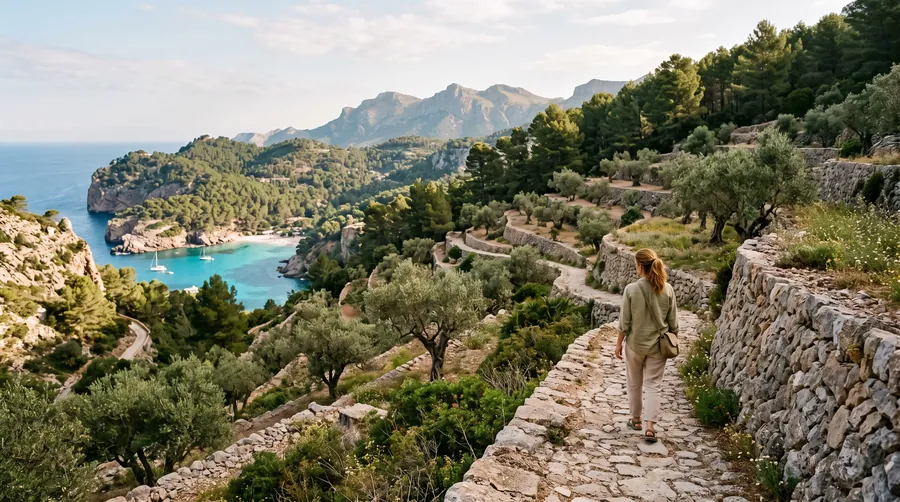
The old town is car-hostile in the best sense, the sea promenade runs for kilometres past the cathedral to the harbour, and the tram to Sóller connects the city to the mountains. A week based in Palma with day trips into the Tramuntana delivers 15,000 steps a day without noticing.
Kyoto
Flat, gridded, with canal paths, temple precincts and the hills at the edge of every district. Bicycles fill the gaps. Kyoto is the walking city that also has forests, which is the combination the body wants.
Merano
A spa town built for convalescents in the nineteenth century, which means promenades along the river and above the town, with benches, shade and views. Merano is the model of a town designed for slow, daily walking.
Reykjavík and the pool habit
Small enough to walk across, with a pool in every neighbourhood and a seafront path around the peninsula. In Reykjavík the walk to the pool is the workout before the workout.
Marbella’s promenade
Ten kilometres of seafront path from the old town to Puerto Banús and beyond, used daily by residents of every age. The Costa del Sol is a car region with one great exception, and the exception is where people live longest.
Choose the base by the walk
When you book, check the walk to breakfast, to the sea or the park, to dinner. If all three are under fifteen minutes, the trip will be healthy without a plan. The Walk the World tool shows what a year of that adds up to.
Try it
Walk the WorldEnter your daily steps and height, and the tool converts a year of walking into kilometres and into a journey between the fifteen destinations on this site.Trip DesignerChoose what the trip should do for you, when you can go, how long and how hard.Frequently asked questions
Does walking in a city count as exercise?
Yes. Brisk walking is moderate-intensity activity, and daily errands on foot add up to the 150 minutes a week most guidelines recommend.
What is a fifteen-minute city?
A planning idea in which daily needs are within a fifteen-minute walk or cycle. Old European towns achieved it by accident centuries ago.